Tooth Replacement
What Are the Best Options for Replacing Missing Teeth?
The main ways to replace missing teeth include dental implants, fixed bridges, and removable dentures or partial dentures. The best option depends on how many teeth are missing, the condition of neighboring teeth, bone and gum health, your bite, and your preferences.
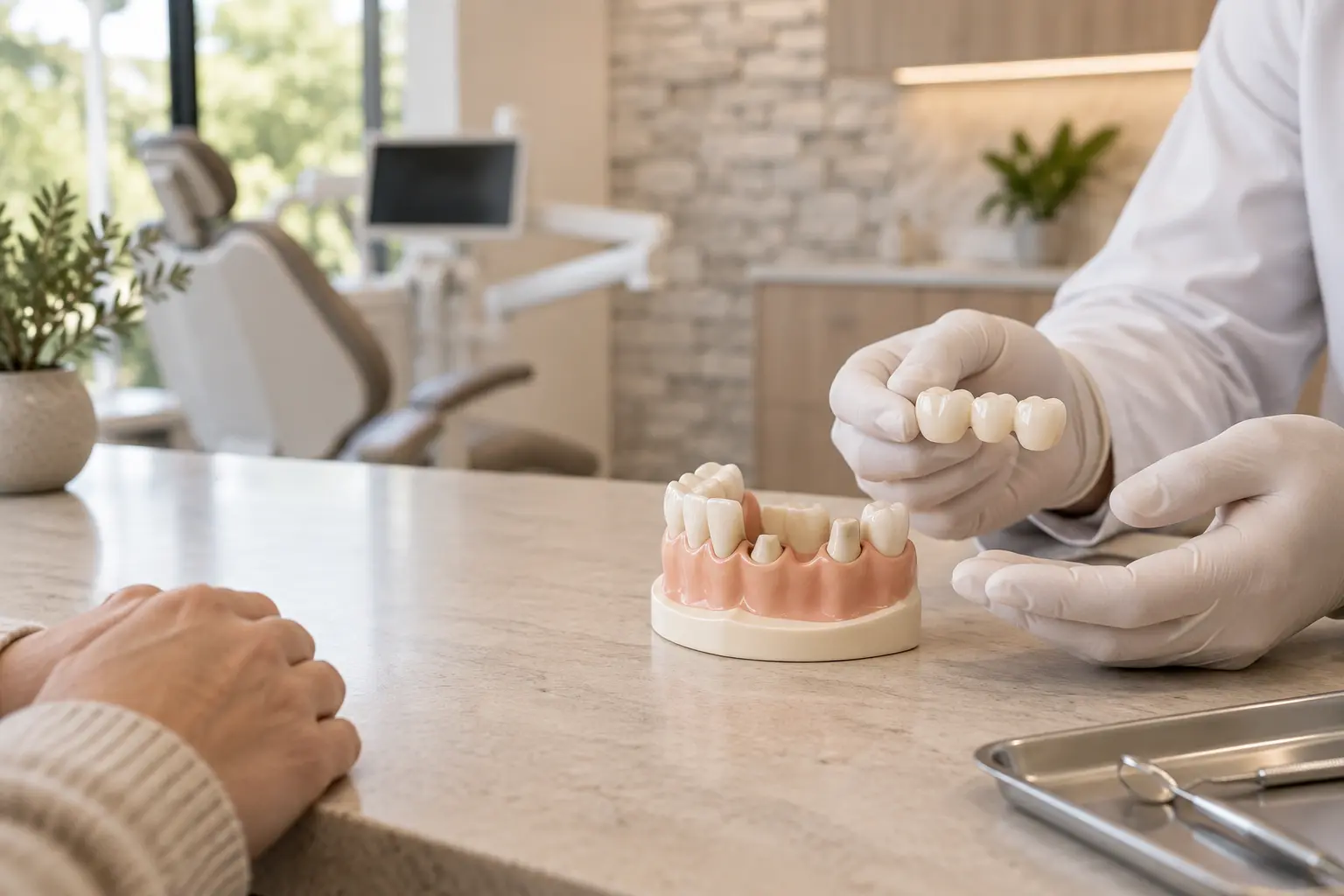
The main options for replacing missing teeth are dental implants, fixed dental bridges, and removable dentures or partial dentures. None is automatically best for every person. The right choice depends on how many teeth are missing, the health of neighboring teeth, bone and gum support, your bite, medical factors, treatment time, maintenance, and what you are comfortable wearing and caring for long term.
If you are comparing choices in Burbank, Magnolia Dentistry can evaluate the space and discuss whether dental implants, a dental bridge, or another restorative approach makes sense for your mouth. This article explains the decision before you sit down for that consultation.
Why replace a missing tooth at all?
Some missing teeth affect appearance immediately, while others are out of sight. Even when a gap is not visible, it can change how you chew and how the neighboring teeth share forces. Teeth may drift or tip into an open space, and the opposing tooth can move when it no longer has normal contact. These changes do not happen identically in every person, but they are part of why dentists discuss replacement rather than treating a missing tooth as only a cosmetic issue.
There are also cases where leaving a space is reasonable. The decision should consider function, stability, hygiene, bite, overall treatment burden, and your goals—not a blanket rule that every gap must be filled.
Option 1: a single dental implant
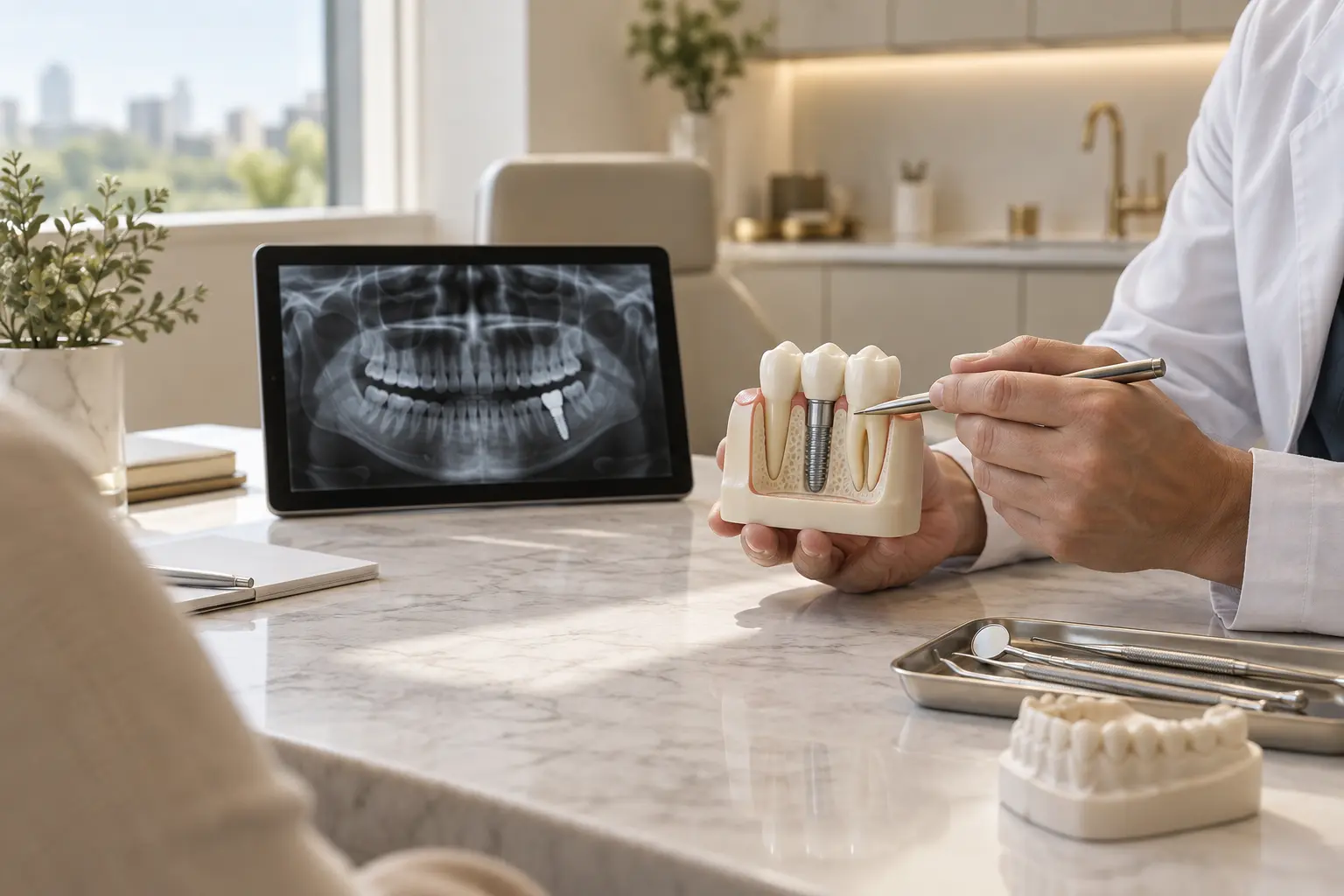
A single dental implant replaces the missing root with an implant in the jaw and supports an individual crown. One major advantage is that the restoration does not need to use neighboring teeth as bridge supports. The American Academy of Periodontology notes that a single-tooth implant can replace a missing tooth without preparing adjacent teeth for crowns.
Implants require enough healthy bone and gum support, appropriate healing, and ongoing plaque control. Treatment usually involves a surgical phase and a healing period before the final restoration is completed. If you want a detailed sequence, see what to expect with dental implant treatment.
A dental implant may be worth discussing when:
- One or more teeth are missing and the site can support implant treatment
- Neighboring teeth are healthy and you would prefer not to prepare them for a bridge
- You are comfortable with a surgical treatment and healing period
- You can maintain the implant and surrounding gums long term
- Your medical and dental history does not create an unacceptable healing risk
Option 2: a fixed dental bridge
A traditional fixed bridge replaces a missing tooth by connecting an artificial tooth to crowns or other retainers on neighboring teeth. It is not removable by the patient. A bridge can restore appearance and chewing without placing an implant in the missing-tooth site.
The trade-off is that the supporting teeth become part of the restoration. If those teeth are already heavily restored or need crowns, that may be reasonable. If they are untouched and healthy, preparing them can be a more significant consideration. Cleaning underneath the replacement tooth also requires a specific flossing or interdental technique.
Option 3: removable partial dentures
A removable partial denture replaces one or more missing teeth and is taken out for cleaning. It may be supported by the gums, remaining teeth, or a combination. Removable treatment can replace several teeth without an implant at each site and may be appropriate when surgery is not desired or when the pattern of missing teeth makes a fixed bridge impractical.
The experience is different from a fixed restoration. A removable prosthesis has to be inserted, removed, cleaned, and periodically adjusted as the mouth changes. Some people adapt well; others prefer a fixed option. Magnolia Dentistry does not currently list a standalone denture service page, so this article does not claim a specific denture system or technique is offered by the practice.
Option 4: implant-supported bridges or larger restorations
When several teeth are missing, implants can sometimes support a bridge so that the number of implants does not have to equal the number of missing teeth. The American Academy of Periodontology describes multiple-tooth implant restorations as a way to replace several missing teeth while avoiding reliance on adjacent natural teeth.
The planning becomes more complex because implant position, bone volume, bite forces, hygiene access, and the final prosthetic design all interact. A larger implant restoration should be planned from the final tooth position backward, not by placing implants first and deciding what to attach later.
Dental implant vs. bridge vs. removable option
| Consideration | Dental implant | Fixed bridge | Removable partial denture |
|---|---|---|---|
| Support | Implant in the jaw supports the restoration | Neighboring teeth support the replacement tooth | Remaining teeth and/or gums support the prosthesis |
| Surgery | Usually yes | Usually no implant surgery | Usually no implant surgery unless combined with implants |
| Neighboring teeth | Usually do not need preparation solely to support a single implant crown | Supporting teeth generally require preparation | May use clasps or other support from remaining teeth |
| Treatment time | Often several months because of healing | Usually shorter than a staged implant process | Varies with design and required dental treatment |
| Daily care | Brush and clean around the implant and restoration | Clean around crowns and under the bridge | Remove and clean the prosthesis as instructed |
| Feel | Fixed | Fixed | Removable |
What if the tooth is still present but may need removal?
Replacement planning ideally starts before extraction when possible. If a tooth cannot be predictably restored, the dentist can discuss what the future space will need before removal. Bone condition, gum shape, temporary replacement, and the timing of an implant or bridge can all be considered in advance.
Magnolia Dentistry’s tooth extraction page explains that extraction is considered after assessing whether the tooth can be saved and what comes next. The point is not to rush from “bad tooth” to “implant.” It is to plan the whole sequence.
How bone and gum health affect the choice
Implants depend on the tissues that support them, so bone and periodontal health are central to candidacy. A bridge does not need an implant in the gap, but it depends on strong supporting teeth and healthy surrounding gums. Removable options also need healthy tissues and careful maintenance because plaque can collect around supporting teeth.
If gum disease is active, stabilizing it may need to come before definitive tooth replacement. The guide on bleeding gums explains why repeated bleeding is worth evaluating rather than assuming it is only from brushing.
What about cost?
Cost comparisons should include the whole treatment rather than a single component. Implant treatment may involve the implant, abutment, crown or bridge, imaging, extraction, and sometimes grafting. A bridge involves the supporting teeth and laboratory restoration. A removable prosthesis has its own design, adjustment, and maintenance needs.
Magnolia Dentistry does not publish universal prices for these options on the current website, so this guide does not invent a price range. Ask for a treatment-specific estimate after the dentist knows which teeth and procedures are actually involved.
Which option is easiest to maintain?
“Easy” depends on dexterity, anatomy, and willingness to use the right tools. A single implant crown may feel similar to a natural tooth but still needs careful cleaning around the gumline. A bridge needs cleaning underneath the artificial tooth. A removable partial denture must be taken out and cleaned, and the supporting teeth still need normal brushing and interdental care.
Questions to bring to a tooth-replacement consultation
- Can the missing space safely be left as it is?
- What are the realistic fixed and removable options for this exact gap?
- Would an implant require grafting or additional treatment?
- What would need to be done to the neighboring teeth for a bridge?
- How long would each option take from start to finish?
- How should each option be cleaned and maintained?
- What could make one option a poor fit for my medical or dental history?
The best replacement is the one that restores useful function with a maintenance plan you can follow and an acceptable amount of treatment for the surrounding teeth and tissues. A consultation should leave you understanding the trade-offs rather than feeling that there is only one possible answer.
COMMON QUESTIONS
Questions patients often ask
Is an implant always better than a bridge?
No. Implants avoid using adjacent teeth as bridge supports, but they require surgery, adequate tissues, healing time, and long-term maintenance. A bridge may be more appropriate in some mouths.
Can one implant replace several teeth?
Several missing teeth can sometimes be replaced with an implant-supported bridge using fewer implants than missing teeth. The design depends on the span, bone, bite, and restorative plan.
Can I leave a missing tooth unreplaced?
Sometimes. The importance of replacement depends on the location, bite, neighboring teeth, function, and risk of movement. A dentist can explain the likely consequences in your situation.
How soon after extraction can a missing tooth be replaced?
Timing depends on the condition of the socket, infection, bone, gums, and the replacement method. Some implant cases can be immediate; others need staged healing.
Do bridges and implants last forever?
No dental restoration is guaranteed for life. Both require maintenance and can develop biological or mechanical complications over time.
Sources and further reading
These professional resources support the general dental information in this article. They do not replace an examination with your dentist.
YOUR NEXT STEP
Ready to compare options for a missing tooth?
Magnolia Dentistry can examine the space, neighboring teeth, gums, bone support, and bite so you can compare realistic replacement options instead of choosing from a generic list.
 Dental Implants
Dental Implants in Burbank: What to Expect Before, During, and After Treatment
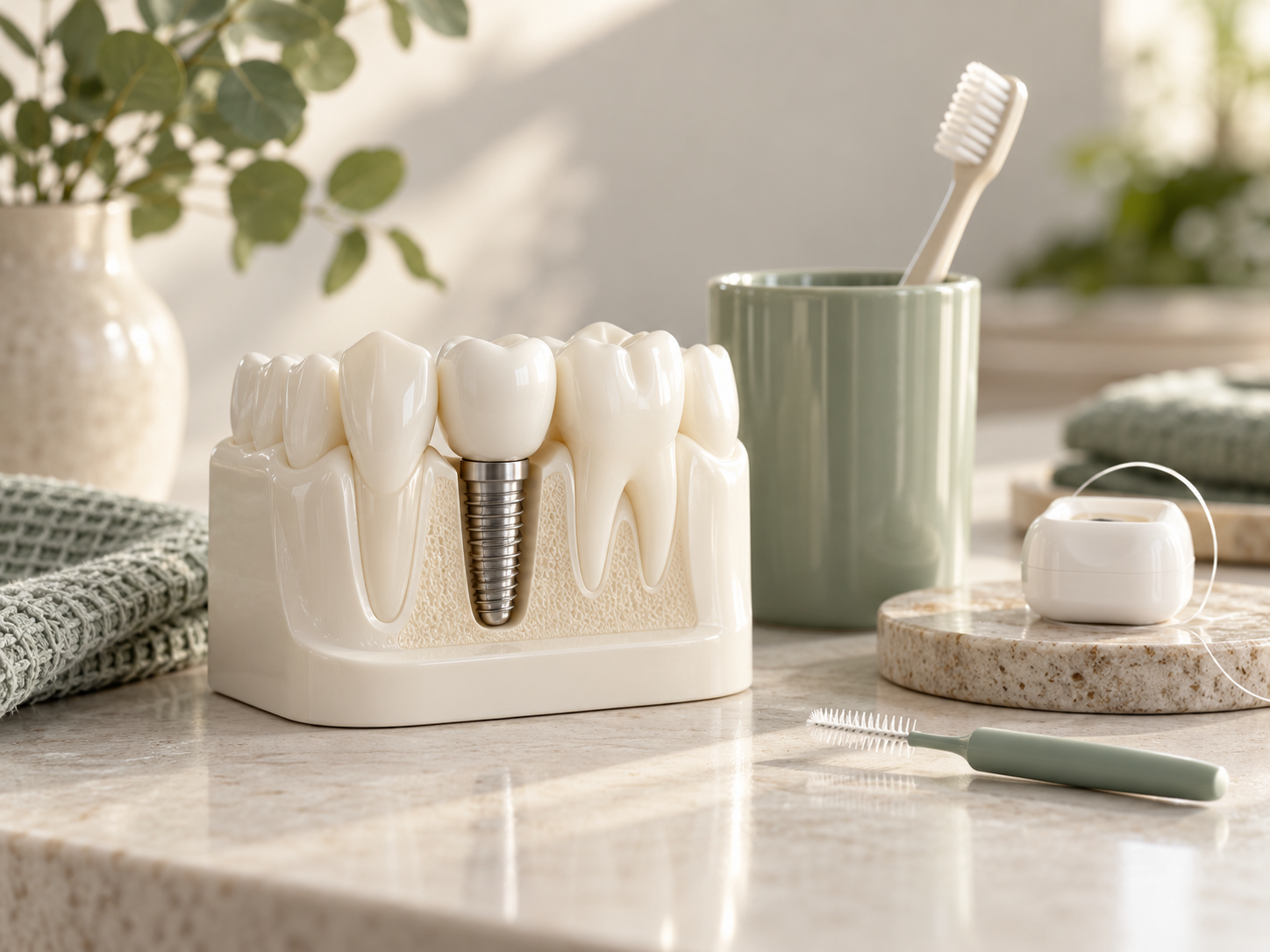
Dental implant treatment is usually a sequence rather than a single appointment. Planning comes first, placement is followed by healing, and the final restoration is completed only when the implant site is ready.
Read the guide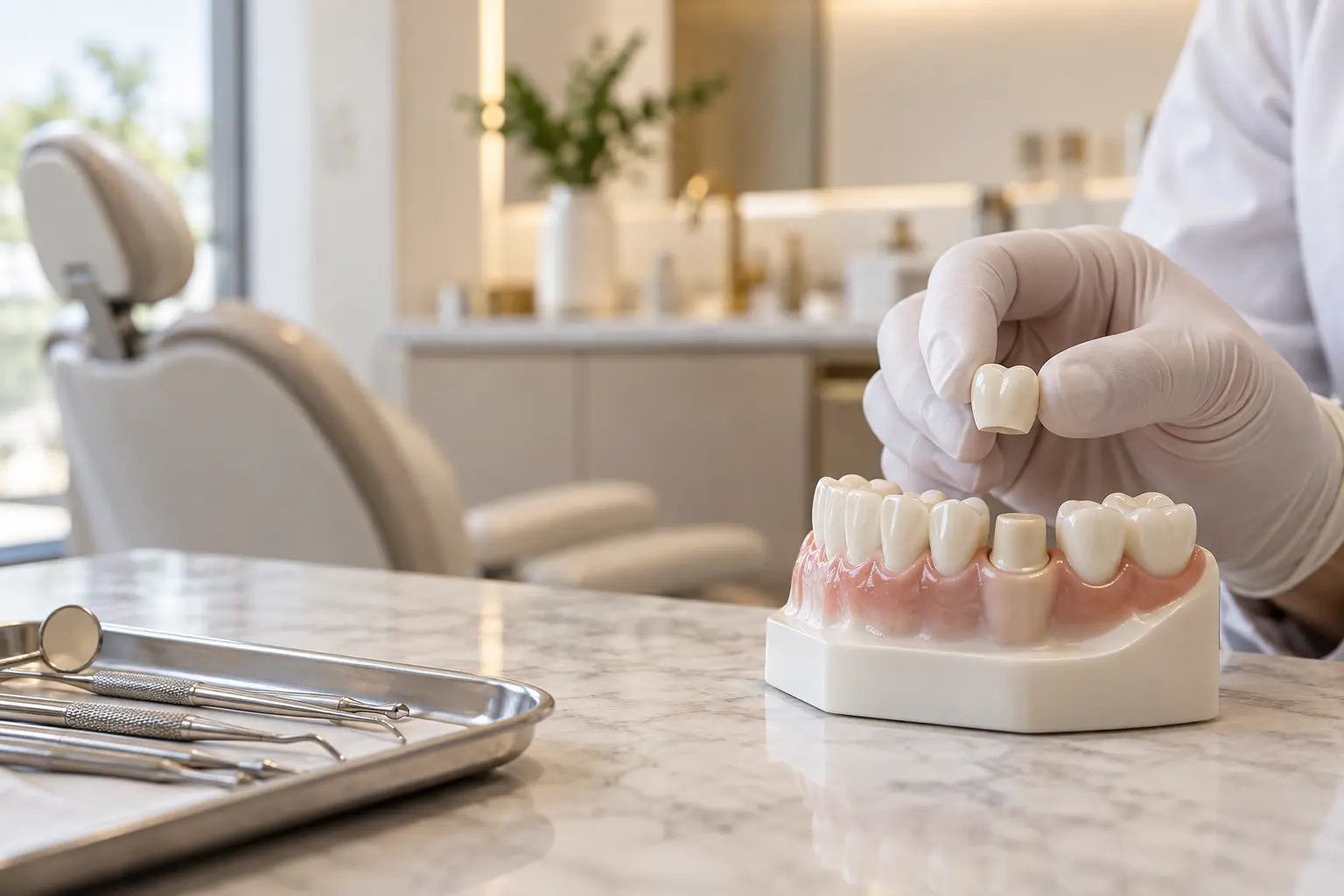 Restorative Dentistry
Dental Crown vs. Filling: Which Treatment Is Right for a Damaged Tooth?
A filling repairs a smaller area of damaged tooth structure, while a crown covers and protects much more of the tooth. The better option depends on how much healthy tooth remains, where the damage is, and how the tooth functions in your bite.
Read the guide Gum Health
Bleeding Gums: When Is It Normal and When Should You See a Dentist?
Occasional light bleeding can happen when you start flossing or brush too hard, but repeated bleeding is not something to ignore. Inflamed gums, plaque buildup, medications, pregnancy, and periodontal disease are among the possible causes.
Read the guide