Restorative Dentistry
Dental Crown vs. Filling: Which Treatment Is Right for a Damaged Tooth?
A filling repairs a smaller area of damaged tooth structure, while a crown covers and protects much more of the tooth. The better option depends on how much healthy tooth remains, where the damage is, and how the tooth functions in your bite.
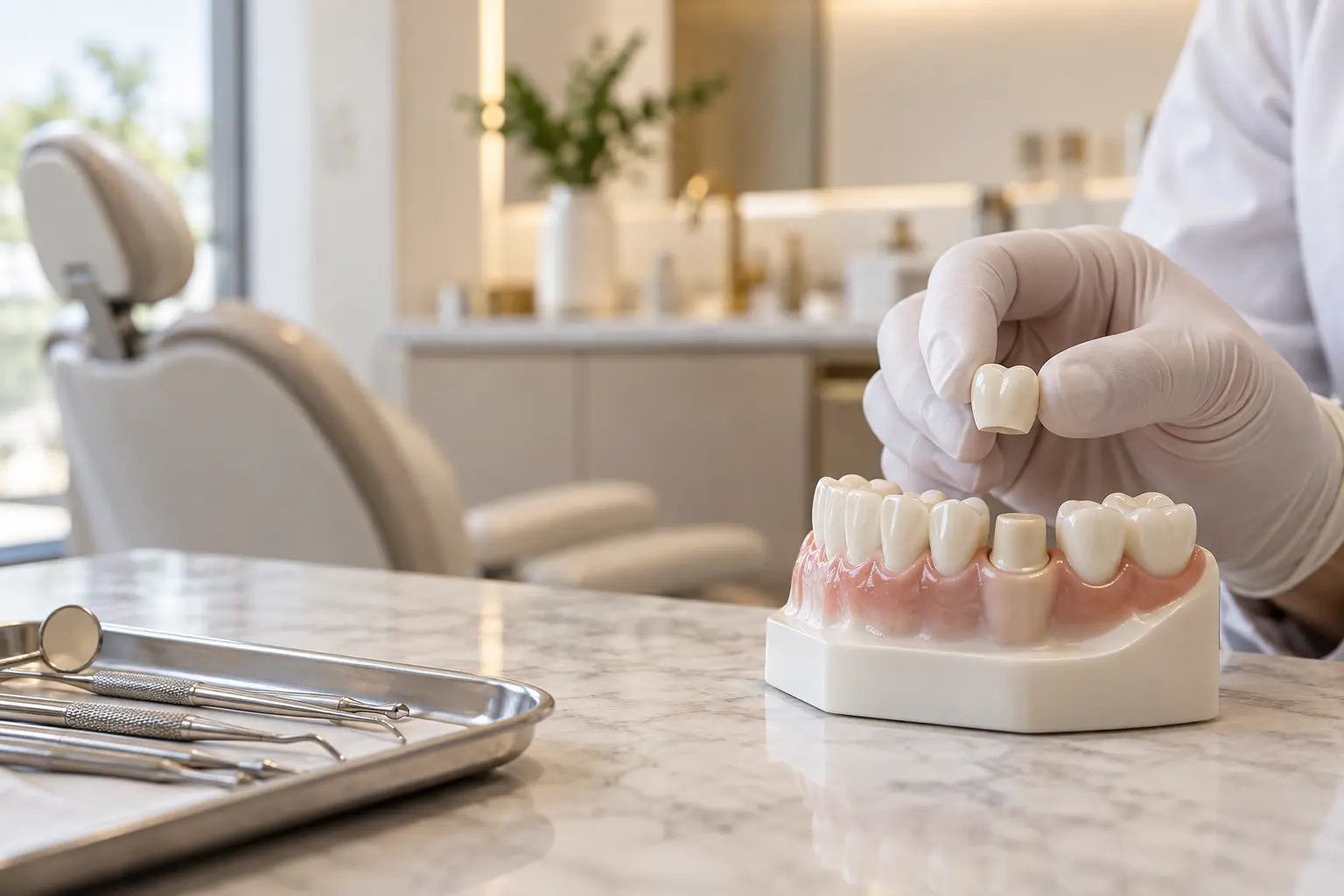
The difference between a dental crown and a filling is mainly how much of the tooth each restoration replaces. A filling repairs a specific area where decay or damage has been removed. A crown covers most or all of the visible part of a prepared tooth. When a tooth has enough strong structure remaining, a filling may be appropriate. When the tooth is weakened, heavily restored, cracked, or missing a large amount of structure, a dental crown may provide more protection.
The choice cannot be made reliably from symptoms alone. Two teeth that look similar in a mirror can have very different amounts of remaining enamel and dentin, different crack patterns, and different biting forces. An examination and, when appropriate, dental imaging help a dentist decide whether the tooth can be repaired conservatively or needs greater coverage.
What does a dental filling do?
A filling replaces tooth structure removed because of decay or a small-to-moderate defect. The dentist removes unhealthy material, prepares the area, and places a restorative material that rebuilds the missing portion. Magnolia Dentistry has a dedicated dental fillings page explaining how fillings fit into conservative restorative care.
A filling works best when enough strong tooth remains around it to support normal chewing forces. The location matters. A small restoration on a front tooth experiences different forces from a large restoration on a back molar. The size and shape of the remaining tooth therefore matter as much as the size of the cavity.
What does a dental crown do?
A crown is a restoration that surrounds the prepared tooth. The American Dental Association describes crowns as a way to restore a tooth’s shape and size and to strengthen teeth that are weak, broken, or heavily filled. Crowns can also be used after root canal treatment or as the visible restoration on a dental implant.
Because a crown covers more of the tooth, preparing for one is more extensive than placing a small filling. That does not make a crown “better.” It makes it a different tool for a different amount or pattern of damage.
Crown vs. filling: the main differences
| Question | Filling | Crown |
|---|---|---|
| How much tooth is restored? | A localized area | Most or all of the visible prepared tooth |
| Typical reason | Smaller area of decay or damage with good surrounding support | A weakened, cracked, heavily restored, or substantially damaged tooth |
| Tooth preparation | Usually more conservative | Usually more tooth shaping is required to create space and support |
| Bite protection | Relies heavily on remaining tooth structure | Provides broader coverage of the prepared tooth |
| Can it be used after root canal treatment? | Sometimes, depending on the tooth and remaining structure | Often considered for teeth that need greater protection after root canal treatment |
| Maintenance | Brush, clean between teeth, and monitor margins | Brush, clean around the crown margin, and monitor the tooth underneath |
When might a filling be enough?
A filling may be reasonable when the damaged area is limited and the walls or cusps of the tooth remain strong enough to support chewing. This can include a smaller cavity, a defective filling that can be replaced without removing excessive healthy structure, or a conservative repair where the rest of the tooth is stable.
The goal is generally to preserve useful tooth structure when it can be preserved predictably. A larger restoration is not automatically safer simply because it covers more tooth.
When might a dentist recommend a crown instead?
- A large portion of the tooth is missing or weakened
- The tooth has a large existing filling with limited strong structure around it
- A crack places one or more cusps at risk of breaking
- The tooth has broken and needs broader coverage to restore shape and function
- The tooth has had root canal treatment and needs additional structural protection
- A previous restoration has failed and another filling would leave the tooth too compromised
Magnolia Dentistry’s restorative dentistry page explains that the recommendation depends on how much healthy tooth remains, the bite, and the longer-term needs of the tooth. That is the same decision logic that separates many crown cases from filling cases.
What if the tooth is cracked?
A crack changes the decision because it can weaken the way parts of the tooth flex under pressure. Some cracks affect only enamel or a small area and may be repairable. Others extend into deeper tooth structure or toward the pulp. A dentist needs to determine where the crack is, whether the tooth is restorable, and whether symptoms suggest the pulp is involved.
Sharp pain when biting, lingering sensitivity, swelling, or severe spontaneous pain deserves prompt assessment. The guide to signs you may need a root canal explains symptoms that can indicate the pulp inside the tooth is inflamed or infected. A crown may protect a tooth structurally, but it does not by itself treat infected pulp.
Does needing a crown mean the tooth is worse?
Not necessarily in a simple sense. A crown recommendation usually means the dentist believes the tooth needs more coverage than a filling can provide. The reason may be a large old restoration, a fracture, wear, or loss of tooth structure rather than active pain. Conversely, a small-looking cavity can sometimes be deeper than expected. “How bad it feels” and “how much support the tooth needs” are related questions, but they are not the same question.
How long do fillings and crowns last?
No restoration has a guaranteed lifespan. Longevity depends on the size and material of the restoration, the tooth, bite forces, grinding or clenching, oral hygiene, decay risk, and whether the margins remain healthy. A small filling and a full-coverage crown should not be compared as though they are interchangeable products with one universal expiration date.
Regular examinations help identify changes before a restoration becomes an emergency. If you are unsure how often to schedule preventive visits, see the guide on dental cleaning and checkup intervals.
What if the tooth hurts now?
Pain changes the urgency of the evaluation, but it still does not tell you which restoration you need. A painful tooth may have decay, a crack, a loose filling, inflamed pulp, infection, or another problem. If pain is severe, swelling is present, or a restoration has broken, use Magnolia Dentistry’s emergency dental page or call the office directly rather than waiting to decide between a crown and filling on your own.
Questions to ask before choosing a restoration
- How much healthy tooth structure remains?
- Is there a crack, and if so, where does it extend?
- Is the pulp healthy, or is root canal treatment a possibility?
- What happens if I choose a filling instead of a crown in this particular tooth?
- What maintenance or future replacement should I expect?
- Does grinding, clenching, or my bite increase the risk of fracture?
A good restorative decision is not about choosing the least or most treatment. It is about using enough treatment to restore the tooth predictably without removing healthy structure unnecessarily.
What happens at a filling or crown appointment?
For a filling, the dentist removes decay or defective restorative material, prepares the area, places the restorative material, and checks the shape and bite. A crown generally involves more preparation because space has to be created for a restoration that covers the tooth. Depending on the system and clinical situation, the final crown may be completed through a laboratory or another restorative workflow rather than at the same visit.
The number of visits is therefore not a reliable way to decide which treatment is “better.” A crown can be the more appropriate choice for a structurally weakened tooth even if it takes more steps. A filling can be the better choice when adequate tooth structure remains and broader coverage would be unnecessary.
What affects the cost of a crown compared with a filling?
A universal price comparison is not useful because the fee can depend on the tooth, restoration size, material, imaging, whether an old restoration has to be removed, and whether additional treatment such as root canal therapy is needed. Dental insurance benefits also vary by plan. Magnolia Dentistry does not publish one fixed crown-or-filling price on the current website, so a treatment-specific estimate should follow the examination rather than be guessed from an article.
How can you lower the chance that a small repair becomes a larger one?
Regular examinations, daily plaque control, fluoride toothpaste, and addressing new sensitivity or a damaged restoration before it fractures further can all help preserve tooth structure. If you grind or clench, ask whether the pattern is contributing to repeated fractures or worn restorations. Preventive care cannot guarantee that a crown will never be needed, but earlier diagnosis can sometimes leave more conservative options available.

COMMON QUESTIONS
Questions patients often ask
Can a large filling be replaced with another filling?
Sometimes, but the decision depends on how much strong tooth remains after the old filling and any decay are removed. If the remaining tooth is too weak, a crown or another restoration may be recommended.
Is a crown stronger than a filling?
A crown provides broader coverage, but “stronger” is not a complete way to choose treatment. A small defect may not need full coverage, while a weakened tooth may benefit from it.
Will I need a root canal before a crown?
Not automatically. Root canal treatment is recommended for problems involving the pulp, not simply because a crown is being placed.
Can a crown get a cavity?
The crown material itself does not decay, but the natural tooth at or below the crown margin can develop decay. Daily cleaning and regular reviews remain important.
What if a filling or crown falls out?
Call a dentist for assessment. Avoid chewing on the area and do not use household glue. If there is significant pain, swelling, or trauma, treat it as an urgent dental problem.
Sources and further reading
These professional resources support the general dental information in this article. They do not replace an examination with your dentist.
YOUR NEXT STEP
Not sure whether your damaged tooth needs a filling or crown?
Magnolia Dentistry can examine the tooth, explain how much healthy structure remains, and discuss the restorative options that may be appropriate. Schedule an evaluation with our Burbank dental team.
 Root Canal Treatment
Do You Need a Root Canal? 7 Signs You Shouldn’t Ignore
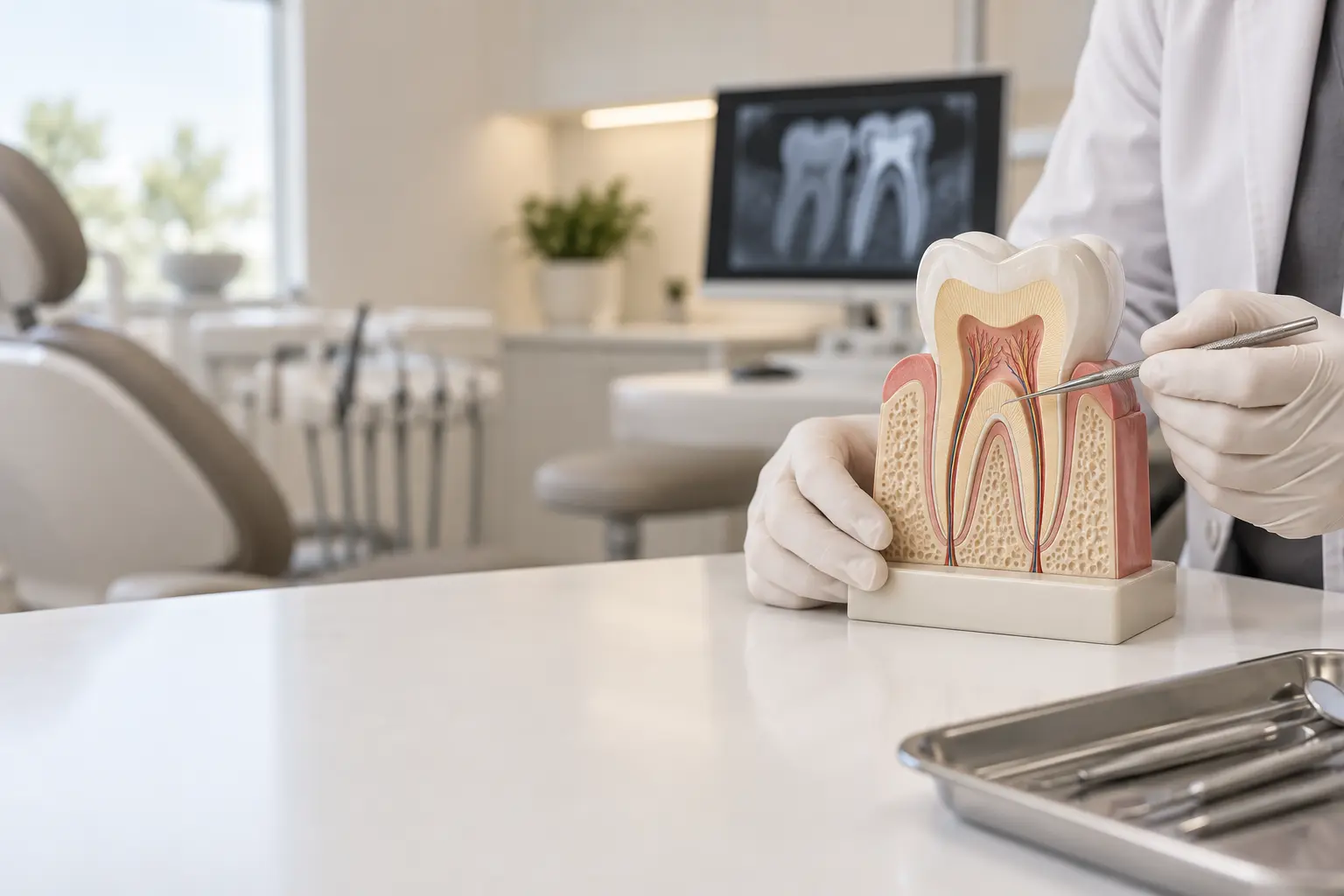
Severe biting pain, lingering hot or cold sensitivity, swelling, a gum pimple, a cracked tooth, deep decay, or persistent pressure can be signs that the pulp inside a tooth is inflamed or infected. Only an examination can confirm whether root canal treatment is needed.
Read the guide Emergency Dentistry
What Should You Do During a Dental Emergency in Burbank?
During a dental emergency, call a dentist as soon as possible, protect the injured area, and avoid home remedies that can make the situation worse. Trouble breathing or swallowing, uncontrolled bleeding, or another life-threatening problem requires emergency medical care.
Read the guide Preventive Dentistry
How Often Should You Get a Dental Cleaning and Checkup?
There is no single cleaning schedule that is right for every person. Some patients do well with one or two routine visits a year, while others need more frequent professional care because of gum disease, decay risk, medical factors, or active treatment.
Read the guide