Dental Implants
Dental Implants in Burbank: What to Expect Before, During, and After Treatment
Dental implant treatment is usually a sequence rather than a single appointment. Planning comes first, placement is followed by healing, and the final restoration is completed only when the implant site is ready.
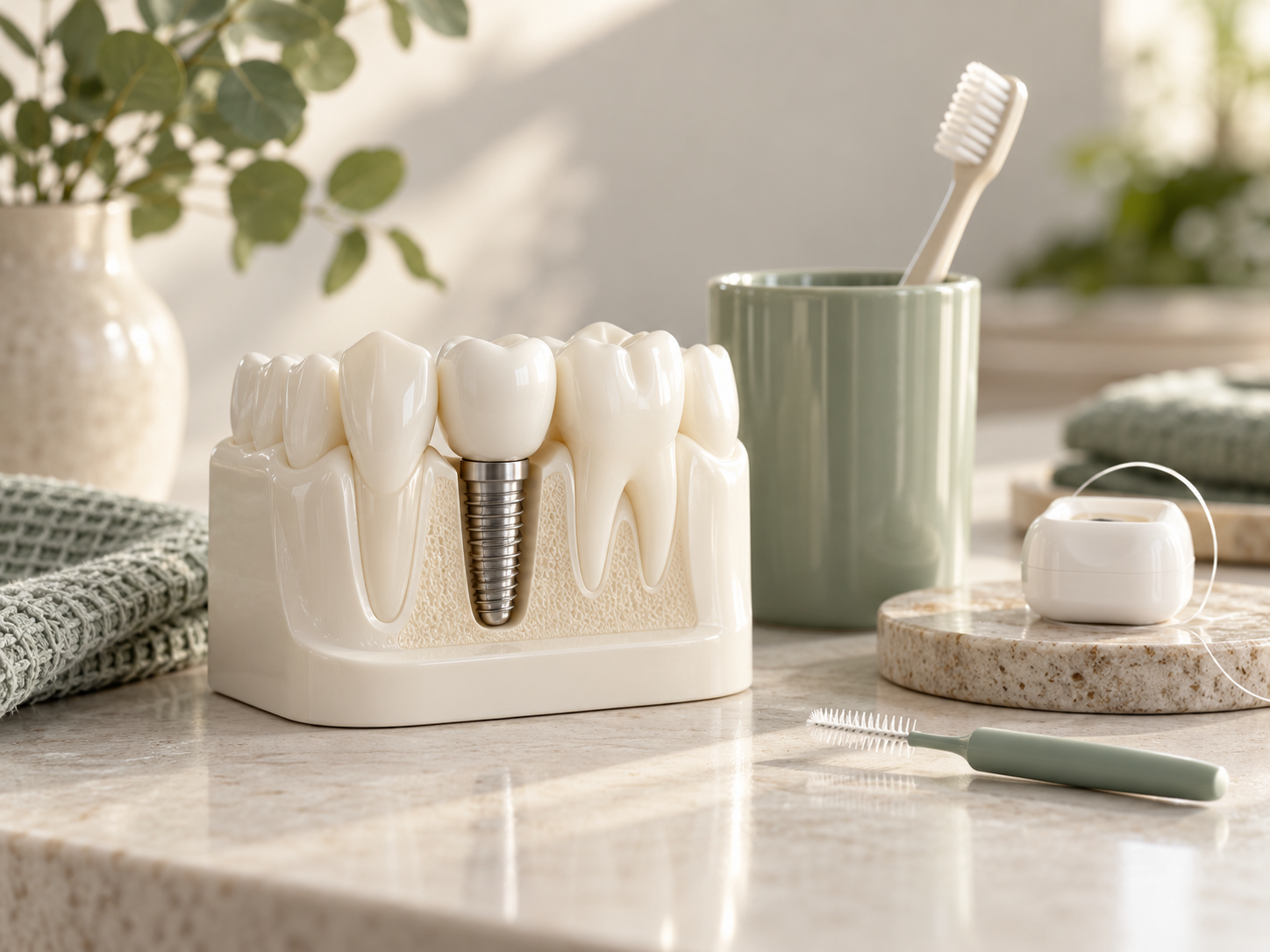
If you are considering dental implants in Burbank, the most useful thing to know is that treatment is planned in stages. A dentist first evaluates the missing-tooth area, your gums, bone support, bite, medical history, and the type of restoration you may need. If an implant is appropriate, placement is followed by a healing period. The final crown, bridge, or larger restoration is then connected after the implant has reached the stage your dentist considers ready for restoration.
That sequence can vary. Some people need an extraction first. Others may need additional bone or gum treatment. In selected cases, parts of treatment can be combined, but immediate placement or an immediate temporary tooth is not appropriate for everyone. An examination is what turns a general implant timeline into a plan for one person.
What is a dental implant?
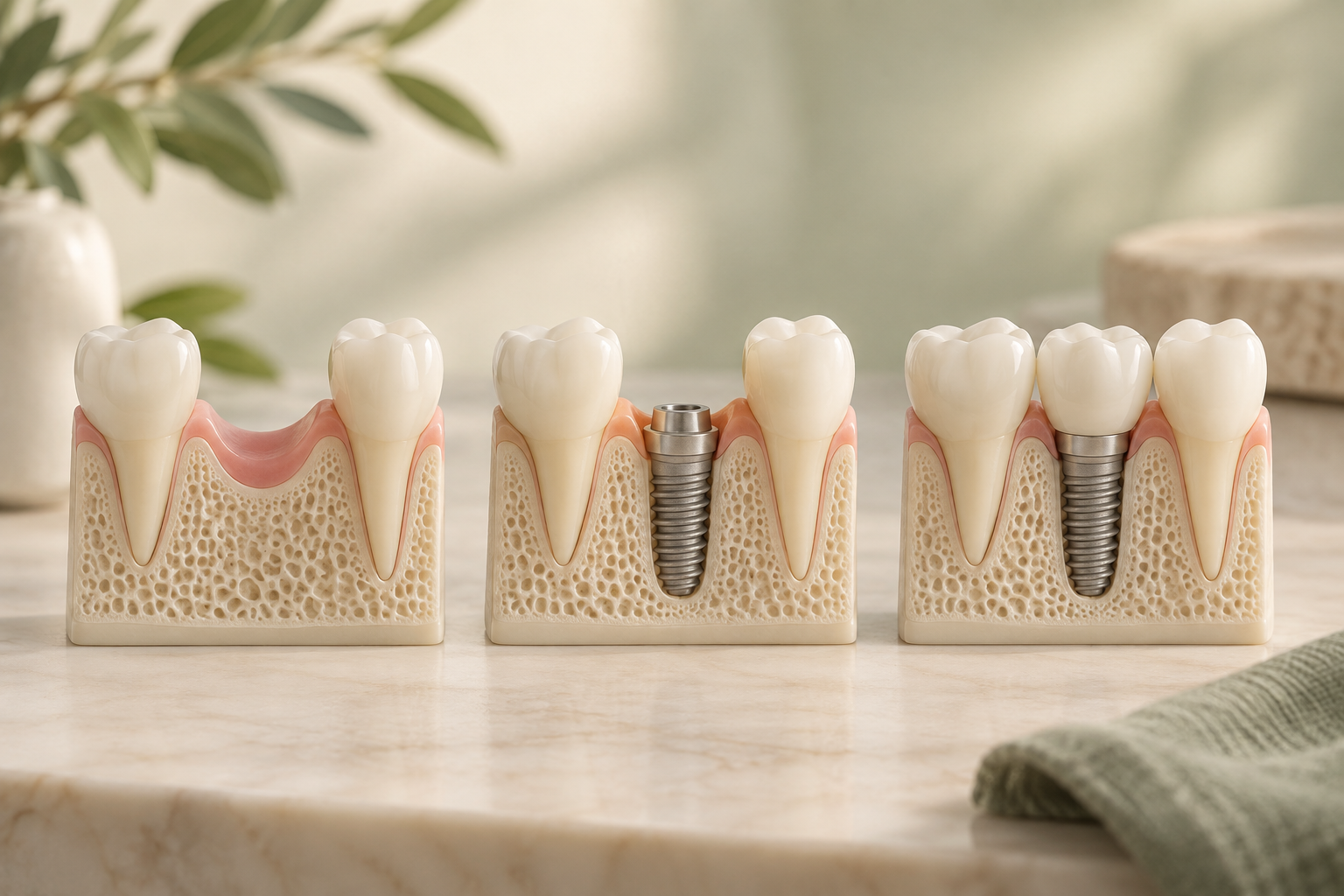
A dental implant is a small fixture placed in the jaw to act as an artificial tooth root. The visible replacement tooth is a separate restoration attached to the implant through a connector called an abutment. For one missing tooth, that restoration is commonly a crown. For several missing teeth, implants may support a bridge or a larger prosthetic restoration.
The American Academy of Periodontology describes implants as an option for replacing one or more missing teeth and emphasizes that healthy gum tissue and adequate bone support are important parts of candidacy. Magnolia Dentistry also evaluates alternatives through its restorative dentistry service when an implant is not the only reasonable way to replace or restore a tooth.
Before implant treatment: the planning appointment
Implant planning is more than checking the gap. Your dentist needs to understand why the tooth was lost or why it may need to be removed, whether infection or gum disease is present, how neighboring teeth are doing, and whether the bite places unusual forces on the area. Your general health, medications, smoking history, and healing factors may also affect the recommendation.
- A clinical examination of the teeth, gums, and bite
- Appropriate dental imaging to evaluate the site and surrounding anatomy
- A discussion of the number of teeth being replaced and the type of final restoration
- Review of gum health, bone support, medical history, and healing considerations
- A comparison with alternatives such as a traditional bridge or removable option when relevant
Who may be a candidate for dental implants?
There is no single checklist that automatically qualifies or disqualifies someone. In general, implant treatment is more predictable when the mouth is free of uncontrolled infection, the gums can be maintained, there is enough bone or a realistic way to address a deficiency, and medical conditions are appropriately managed. Smoking and a history of periodontal disease can affect risk and maintenance needs, so they belong in the planning conversation rather than being hidden from it.
If a damaged tooth is still present, the first question may be whether it can be restored. When removal is being considered, the tooth extraction page explains why a dentist assesses whether saving the tooth remains a reasonable option before removal.
What happens during implant placement?
During implant placement, the treatment area is anesthetized and the implant is positioned in the planned part of the jaw. The exact surgical approach depends on the site and whether additional procedures are needed. Some implants are left to heal under the gum tissue; others have a healing component visible above the gum. Your dentist explains the approach that applies to your case.
The procedure is only one part of the timeline. The biological part happens afterward, as bone heals around the implant. Professional organizations commonly describe this healing as taking a number of months rather than days. The American Academy of Periodontology, for example, describes a two-to-six-month bonding period in its patient information for single-tooth implants. Individual timing can be shorter or longer depending on the site, bone quality, additional procedures, and the way the restoration is planned.
How long does dental implant treatment take?
For many patients, the overall process takes several months because healing cannot be rushed simply to fit a calendar. A straightforward case may move from placement to final restoration after an appropriate healing period. A case involving extraction, grafting, infection control, or several implants can take longer.
| Stage | What happens | Why timing varies |
|---|---|---|
| Consultation and planning | Examination, imaging, medical and dental history, and restorative planning | The site may need treatment before implant placement |
| Implant placement | The implant is positioned in the jaw | The surgical approach depends on anatomy and the treatment plan |
| Healing | Bone and soft tissues heal around the implant | Bone quality, health, smoking, and added procedures can affect timing |
| Final restoration | A crown, bridge, or larger prosthetic restoration is fitted | The implant and surrounding tissues need to be ready for restorative loading |
| Maintenance | Daily cleaning and professional review continue long term | Risk varies with gum health, hygiene, smoking, and medical factors |
What should you expect during recovery?
After implant placement, follow the instructions given for your specific procedure. Some swelling, tenderness, or minor bleeding can occur after oral surgery, but the pattern should generally improve rather than worsen. Your dentist may give instructions about food, activity, cleaning, and medication. Do not change prescription medication on your own, and ask before using anything you are unsure about.
Call the dental office if pain or swelling is getting worse, bleeding is difficult to control, you develop a fever, the implant or temporary restoration feels mobile, or something simply does not seem to be following the expected recovery pattern. Severe swelling that affects breathing or swallowing is a medical emergency and should be treated as such.
What happens when the final tooth is made?
Once the implant site is ready, the restorative phase focuses on the tooth or teeth you will actually use. The dentist records the implant position and the space available for the restoration. Shape, contacts with neighboring teeth, cleansability, appearance, and bite all matter. A single implant typically supports a crown; several implants may support a bridge or larger restoration.
If you are still deciding between options, the guide to replacing missing teeth compares implants, bridges, and removable approaches at a higher level so you can understand the trade-offs before a consultation.
How do you care for a dental implant long term?
Implants cannot develop a cavity, but the tissues around them can become inflamed or lose support. Plaque control therefore still matters. The American Academy of Periodontology notes that peri-implant disease can affect the gum and bone around implants and recommends regular professional monitoring along with brushing and cleaning between teeth.
- Brush thoroughly around the implant restoration and gumline
- Use the interdental cleaning method recommended for the space around your implant
- Attend review and hygiene visits at the interval recommended for your risk level
- Report bleeding, swelling, tenderness, bad taste, or movement around an implant
- Avoid smoking and discuss tobacco use honestly with your dental team
What affects dental implant cost?
A responsible estimate requires an examination because “an implant” can describe very different treatment. Cost can be affected by the number of implants, the number of replacement teeth, the type of restoration, imaging, whether an extraction or graft is needed, and whether treatment is staged. Magnolia Dentistry does not publish a universal implant price on the current website, so this guide does not invent one. A consultation is the appropriate place to ask for the treatment-specific financial details.
When should you schedule an implant consultation?
You do not have to wait until a missing-tooth space causes another problem. A consultation can be useful when a tooth has already been lost, when a tooth may not be restorable, or when you are comparing an implant with a bridge or removable replacement. The goal is not to push everyone toward an implant. It is to understand what is possible in your mouth, what the sequence would involve, and what you would need to maintain afterward.
COMMON QUESTIONS
Questions patients often ask
How painful is dental implant treatment?
Local anesthesia is used for implant placement. Post-treatment soreness or swelling can occur, and the amount varies by procedure and person. Your dentist should explain what to expect and what to do if discomfort is worsening rather than improving.
Can a dental implant be placed the same day a tooth is removed?
Sometimes, but not in every site. Infection, bone support, anatomy, gum condition, bite, and the restorative plan all affect whether immediate placement is appropriate.
How long does a dental implant take to heal?
Healing commonly takes months. Professional patient resources often describe a period of roughly two to six months for bone to bond with an implant, but your timeline depends on the site and treatment plan.
Do dental implants need special cleaning?
They need careful daily plaque removal and professional monitoring. The exact tools depend on the shape of your restoration and the spaces around it.
What if I do not have enough bone for an implant?
Low bone volume does not automatically answer the question. Your dentist may discuss grafting, a different implant plan, or a non-implant replacement option depending on the anatomy and your goals.
Sources and further reading
These professional resources support the general dental information in this article. They do not replace an examination with your dentist.
YOUR NEXT STEP
Considering a dental implant in Burbank?
Magnolia Dentistry can evaluate the missing-tooth area, review implant candidacy, and compare implant treatment with other tooth-replacement options. Book a consultation or call the Burbank office to discuss your next step.
 Tooth Replacement
What Are the Best Options for Replacing Missing Teeth?
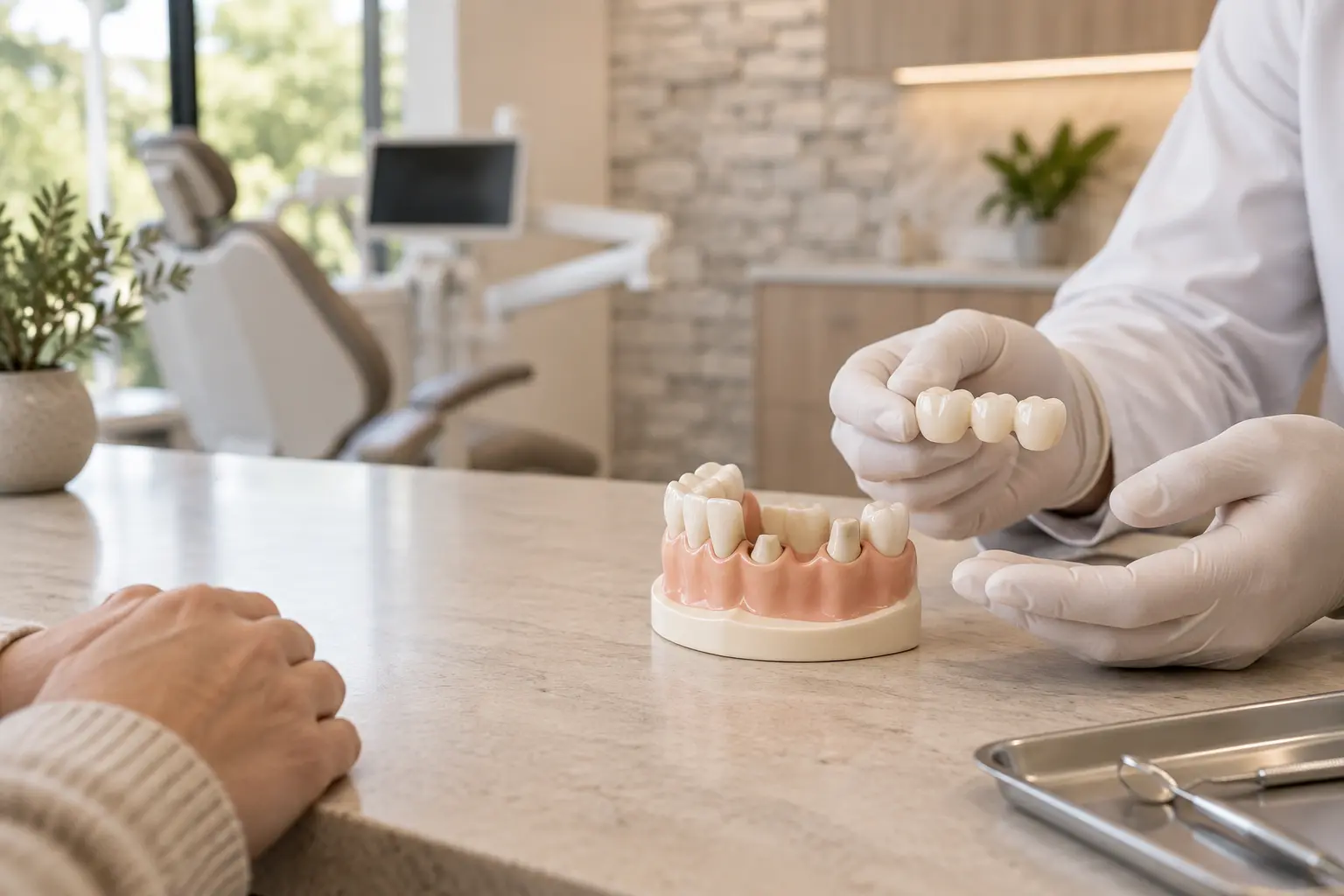
The main ways to replace missing teeth include dental implants, fixed bridges, and removable dentures or partial dentures. The best option depends on how many teeth are missing, the condition of neighboring teeth, bone and gum health, your bite, and your preferences.
Read the guide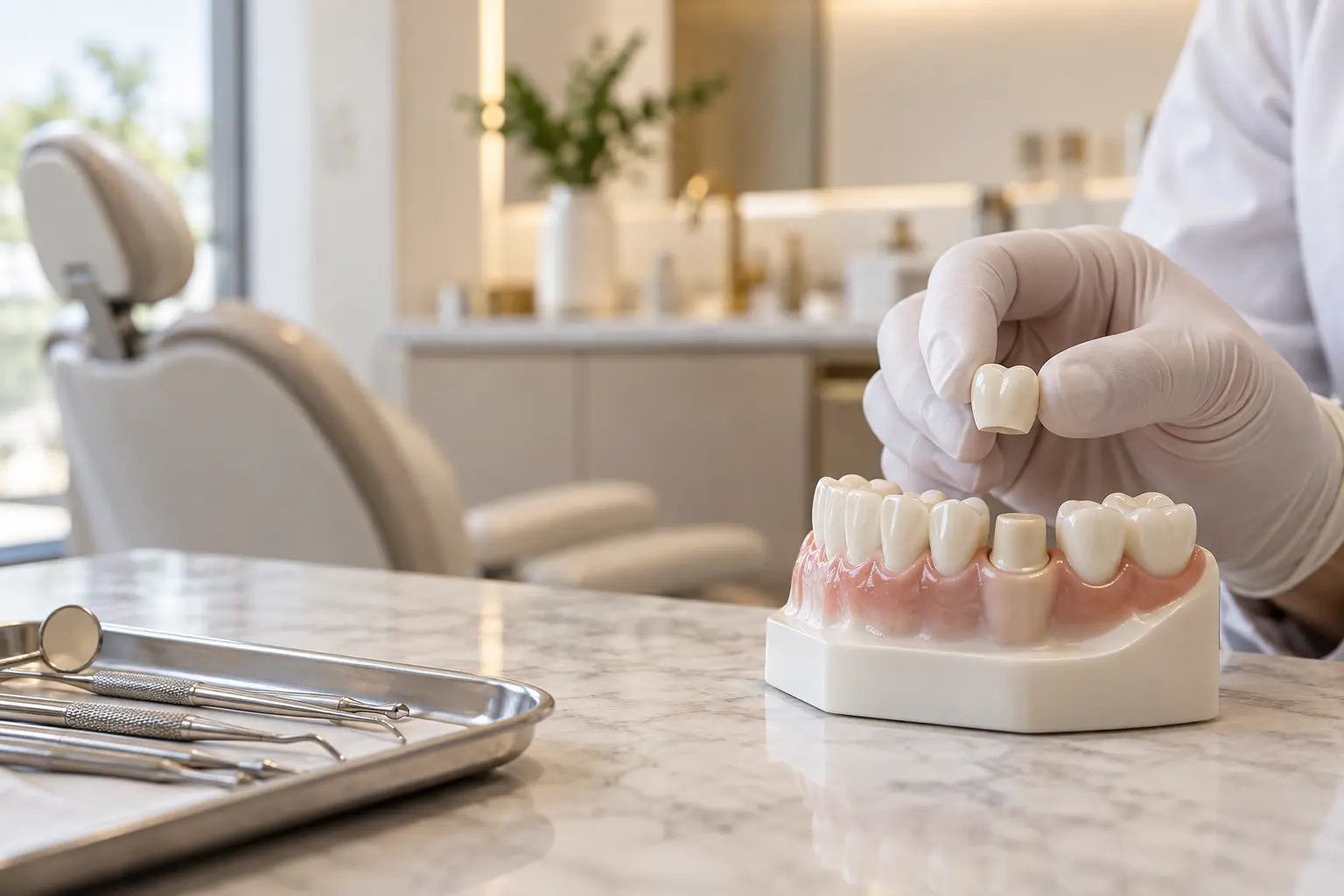 Restorative Dentistry
Dental Crown vs. Filling: Which Treatment Is Right for a Damaged Tooth?
A filling repairs a smaller area of damaged tooth structure, while a crown covers and protects much more of the tooth. The better option depends on how much healthy tooth remains, where the damage is, and how the tooth functions in your bite.
Read the guide Emergency Dentistry
What Should You Do During a Dental Emergency in Burbank?
During a dental emergency, call a dentist as soon as possible, protect the injured area, and avoid home remedies that can make the situation worse. Trouble breathing or swallowing, uncontrolled bleeding, or another life-threatening problem requires emergency medical care.
Read the guide