Invisalign
How Long Does Invisalign Take? A Complete Guide for Burbank Patients
Invisalign treatment is measured in months, not days, and there is no single timeline for every smile. Mild alignment concerns may take under a year, while more complex bite correction can take considerably longer.

How long does Invisalign take? The general answer is that clear-aligner treatment often takes many months, and the exact timeline depends on what your teeth and bite need to do. The American Association of Orthodontists notes that mild crowding or spacing can often be treated in roughly eight to twelve months, while more complex bite problems may take a couple of years. That is a useful range, not a promise for an individual case.
At Magnolia Dentistry, an Invisalign consultation starts with an assessment of your teeth, bite, and goals. The estimate that matters is the one based on your own starting position and planned tooth movements.
Why Invisalign timelines are different for every patient
Clear aligners work by applying controlled pressure in a sequence. Each tray represents a small planned change. Someone who needs only modest alignment of a few teeth will usually have a shorter sequence than someone who needs significant crowding correction, space closure, rotation, or bite changes. The number of movements is only part of the story; how difficult those movements are also matters.
- How much crowding or spacing is present
- Whether the bite also needs correction
- Which teeth need rotation, intrusion, extrusion, or root movement
- How consistently the aligners are worn
- Whether attachments, elastics, or other auxiliaries are needed
- How your teeth respond during treatment
- Whether refinement aligners are recommended after the first series
How many hours a day should Invisalign aligners be worn?
Wear time is one of the most controllable parts of the timeline. The American Association of Orthodontists describes clear aligners as typically being worn at least 22 hours a day, with removal for eating, drinking anything other than water, brushing, and flossing. Aligners can only apply the planned force while they are in your mouth.
If trays are left out for long stretches, teeth may not track with the planned sequence. That can make the next tray difficult to seat, require extra time in a current tray, or lead to a reassessment. Following the wear instructions is not about chasing a perfect compliance score; it is about keeping the treatment mechanics predictable.
How often do you change Invisalign trays?
Tray-change intervals vary by treatment plan. Professional orthodontic guidance commonly describes each aligner being worn for about one to two weeks, although some plans use a different interval. Your provider determines when to change based on the planned movement and how treatment is progressing.
It is also important to distinguish “number of trays” from “months of treatment.” A person may receive only several aligners at a time and then collect additional sets at review appointments. The total plan is what determines the overall duration.
What happens at an Invisalign consultation?
A good aligner consultation does not start by promising a number of months. It starts by checking whether clear aligners are appropriate at all. The dentist looks at tooth position, bite relationships, gum health, decay, existing restorations, and the amount of movement required. If untreated oral-health problems are present, those may need attention before active tooth movement.
If your main concern is appearance rather than alignment alone, the consultation may also involve a broader discussion of cosmetic dentistry options. Sometimes whitening, bonding, veneers, or no additional cosmetic treatment is more relevant than trying to solve every visual concern with tooth movement.
A practical Invisalign timeline
| Phase | What usually happens | What can affect the schedule |
|---|---|---|
| Assessment | Examination, records, bite and alignment review, and treatment discussion | Oral-health treatment may be needed before aligners |
| Active aligner series | Sequential trays gradually move the teeth | Complexity and daily wear time affect progress |
| Progress reviews | Tracking, fit, hygiene, and bite are reassessed | Lost trays or poor tracking may alter the plan |
| Refinement if needed | Additional aligners fine-tune remaining movements | Not every patient needs the same amount of refinement |
| Retention | Retainers help maintain the achieved tooth positions | Long-term retainer wear is part of maintaining alignment |
What are Invisalign refinements?
A refinement is an additional set of aligners used when the first sequence does not finish every planned movement or when the bite needs further adjustment. Refinements are common enough that they should be understood as part of aligner treatment planning rather than treated as a failure. Teeth are biological structures, and their response is not identical from person to person.
If refinement trays are needed, they extend the active phase. This is one reason an initial estimate should be treated as an estimate, not a fixed completion date.
Does age change how long Invisalign takes?
Adults can be treated successfully with clear aligners, but adult teeth and supporting tissues may respond differently from those of younger patients. The AAO notes that adult treatment can take longer in some situations because adult teeth are more firmly established in the jaw. What matters most is the individual biology and complexity of the case, not age alone.
Can dental cleanings delay Invisalign treatment?
Routine oral care is part of successful aligner treatment, not a distraction from it. Because aligners sit closely over the teeth, plaque and food left behind can remain trapped against enamel. Brush and clean between the teeth before reinserting aligners whenever practical, and follow the visit schedule recommended for your oral health. If you are unsure how often you should be seen, the guide on dental cleaning and checkup frequency explains why recall intervals are individualized.
What can make Invisalign take longer?
- Wearing aligners fewer hours than prescribed
- Losing or damaging trays
- Changing to the next aligner too early
- Skipping review appointments
- More complex bite corrections than initially apparent
- Teeth not tracking as expected
- New decay, gum inflammation, or another oral-health issue that needs attention
When will you know your own Invisalign treatment time?
Your most useful timeline comes after examination and treatment planning. Ask what the plan is trying to correct, how many active stages are anticipated, how often trays should change, how progress will be reviewed, and what might cause the estimate to change. A clear plan should also include what happens after active movement, because retention is part of maintaining the result.
What if an aligner stops fitting properly?
An aligner should generally seat closely over the teeth. A small space at the edge of a new tray can sometimes settle as the teeth move, but a tray that no longer seats, repeatedly lifts off one tooth, or feels very different from the expected fit deserves a call to the treating office. Do not skip ahead several trays to “catch up.” The provider may ask you to wear the current or previous aligner longer, assess an attachment, or rescan if tooth movement has stopped tracking with the plan.
Lost aligners also need individualized advice. Depending on where you are in the sequence, the safest step may be to use the previous tray, move forward, or arrange a replacement. That decision is better made with the provider than by guessing, because the wrong tray can move teeth in a direction that does not match the treatment plan.
Attachments, elastics, and other features can affect the plan
Clear-aligner treatment is not always just a stack of removable trays. Small tooth-colored attachments may be bonded to selected teeth to give an aligner a better surface for particular movements. Elastics may be used when bite correction needs an additional direction of force. These features can make aligners capable of movements that would be less predictable with a smooth tray alone, but they also make consistent wear and review appointments more important.
What happens after the last Invisalign tray?
Finishing the active aligner sequence does not mean the teeth are permanently fixed in their new positions. Teeth can shift after orthodontic treatment, so retention is part of the plan. Your provider will recommend a retainer type and wear schedule based on the finished alignment and bite. Ask about retention before treatment starts so the long-term commitment is clear from the beginning.

COMMON QUESTIONS
Questions patients often ask
Can Invisalign work in six months?
Some limited alignment cases may be relatively short, but six months is not an appropriate expectation for everyone. The amount and type of tooth movement determine the plan.
How many hours a day should I wear Invisalign?
Professional orthodontic guidance commonly recommends at least 22 hours a day for clear aligners unless your treating provider gives different instructions.
What happens if I forget to wear my aligners?
A short lapse may not ruin treatment, but repeated under-wear can cause teeth to stop tracking with the planned sequence. Contact your provider if the next tray no longer fits properly.
Do refinements mean Invisalign did not work?
No. Refinements are additional aligners used to complete or fine-tune planned movements when needed.
Will I need a retainer after Invisalign?
Retention is generally needed after orthodontic tooth movement to help maintain the new positions. Your provider will explain the retainer type and wear schedule.
Sources and further reading
These professional resources support the general dental information in this article. They do not replace an examination with your dentist.
YOUR NEXT STEP
Want a clearer estimate for your Invisalign timeline?
A dental assessment can show which tooth movements are needed and whether clear aligners are appropriate for your bite. Magnolia Dentistry can discuss an estimated treatment sequence based on your individual case.
 Cosmetic Dentistry
Dental Veneers vs. Bonding: Which Is Better for Improving Your Smile?
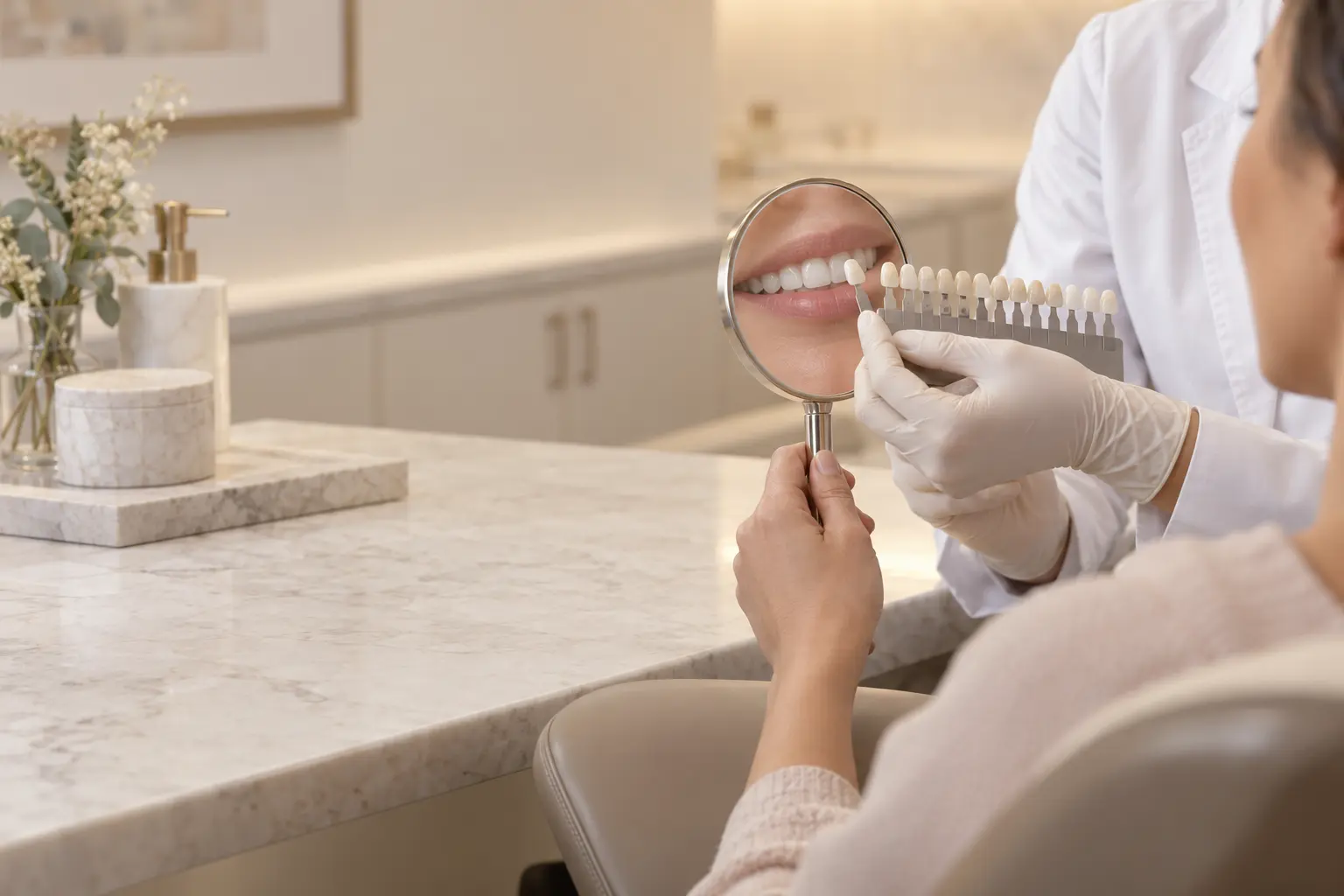
Bonding and veneers can both change the appearance of selected teeth, but they do it differently. Bonding uses tooth-colored composite applied directly to the tooth, while a veneer covers the front surface with composite or porcelain.
Read the guide Cosmetic Dentistry
Professional Teeth Whitening vs. At-Home Whitening: What’s the Difference?
Professional and at-home whitening can both use peroxide-based bleaching agents, but they differ in supervision, concentration, delivery, fit, and how treatment is selected for the cause of discoloration.
Read the guide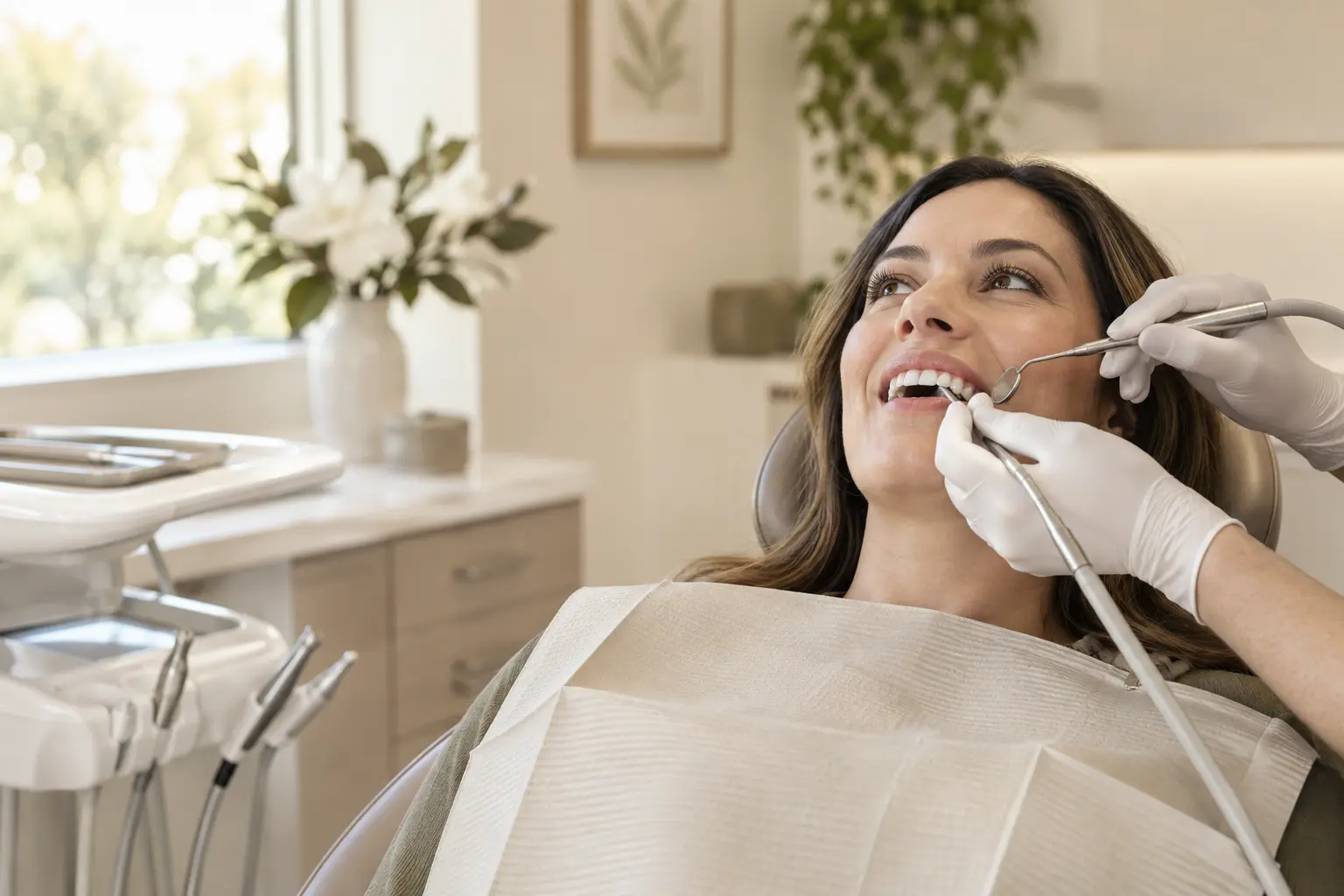 Preventive Dentistry
How Often Should You Get a Dental Cleaning and Checkup?
There is no single cleaning schedule that is right for every person. Some patients do well with one or two routine visits a year, while others need more frequent professional care because of gum disease, decay risk, medical factors, or active treatment.
Read the guide